What is an ETF?
An ETF is a basket. Instead of buying one company, one purchase can give you tiny pieces of hundreds of companies.
ETF = exchange-traded fundMission 01 · Learn how money grows
Small amounts invested in a broad S&P 500 ETF can add up over decades. The secret isn't magic—it's time.
See $100 grow🛡️ Returns aren't guaranteed.
Money, translated
You don't need to be a finance genius. Start with these.
An ETF is a basket. Instead of buying one company, one purchase can give you tiny pieces of hundreds of companies.
ETF = exchange-traded fundIt's an index that tracks about 500 large U.S. companies. Funds such as VOO are designed to follow it.
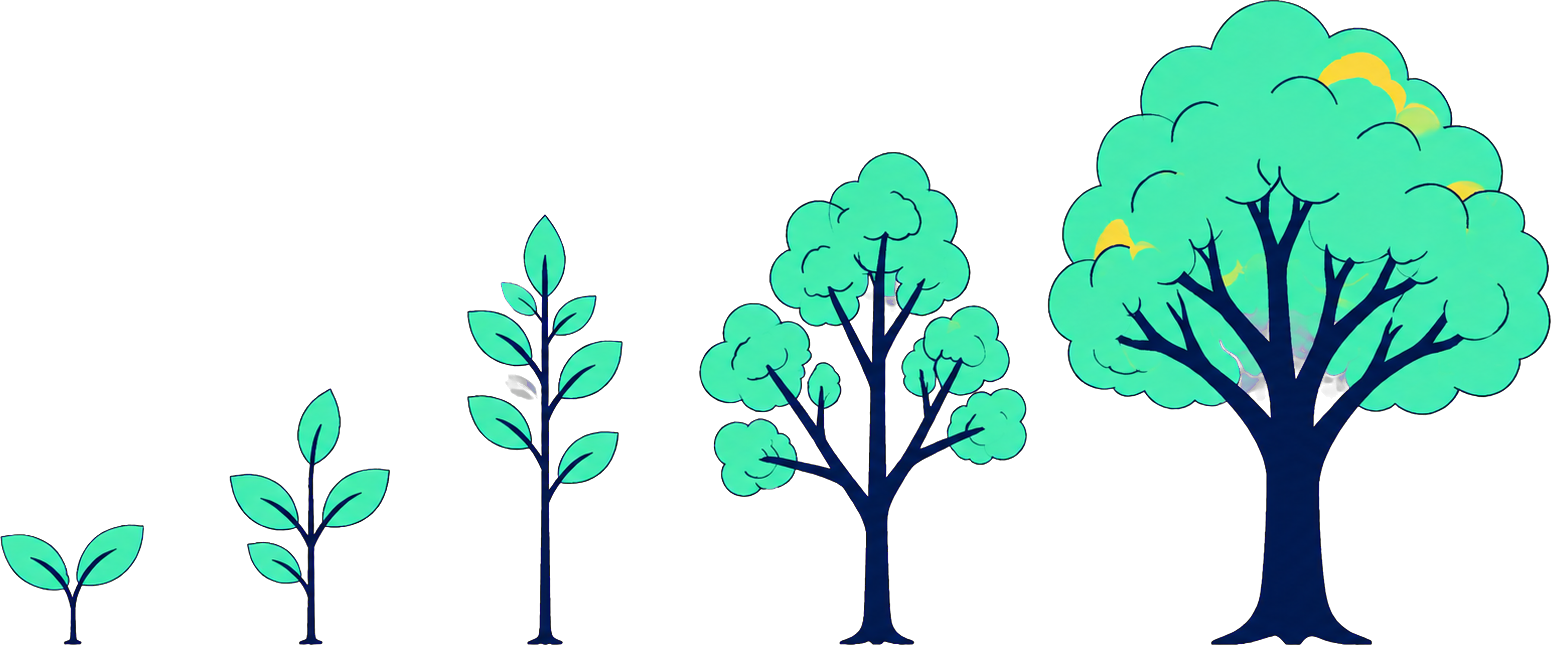
One fund · many businessesYour investment may earn returns. Later, those returns may earn returns too—like a snowball that keeps collecting snow.
Growth building on growthWant a quick estimate of how long money could take to double? Divide 72 by the hypothetical annual return. At 10%, that's about 7.2 years. Over 45 years, that works out to about six full doubling periods.
*The Rule of 72 is an estimate for one amount growing at a steady rate. Our $100-a-month example is different because you keep adding new money, and real market returns are never steady or guaranteed.Growth simulator
Change the controls and watch the model respond. Try 7% as a more cautious example, then compare it with 10%.
Your launch sequence
Money you may need soon belongs in a safe, accessible place—not the stock market.
Adults can explore a brokerage or retirement account. A young person usually needs a parent or guardian to open a custodial account.
Look at what the ETF owns, its fee, how closely it follows its index, and the risks in its official materials.
Regular contributions and a long timeline matter more than trying to guess the market's next move.
For families & classrooms
Ask a young person to predict the result, move the return slider, and compare starting at 20 versus 30. The lesson is not “you'll get rich.” It's that time, consistency, diversification, and risk all matter.